



THE PRACTICE TEST
Practice test at a glance
- Questions
- 300
- Format
- Multiple choice
- Access
- 2 years
- Price
- $39.99
- Answers
- Included
- Explanations
- Included
About these practice questions
These practice questions will help you prepare for the CACMA exam.
This practice test contains 300 practice questions covering the nine sections of the CACMA exam:
- Scrubbing Patient Charts
- Checking-In Patients
- Rooming Patients
- Collecting Patient Vitals
- Performing Point of Care Orders
- Administering Medications/Vaccines
- Discharging Patients
- Responding to Codes/Emergencies
- Managing Communication
All questions have been carefully designed to reflect the questions on the real exam, to help you prepare and get a passing grade.
GET FULL ACCESS
Unlock the full practice test
ONLINE ACCESS
Unlock all 300 practice questions, answers and explanations.
- Immediate access after payment
- One question at a time in practice mode
- Jump directly to any question
- One-time payment
We'll send your purchase information to this address.
Payment is processed by PayPal.
TRY IT FIRST
Sample practice questions
Try some of the questions before buying. Answers and explanations are available with online access.
Section 1: Scrubbing Patient Charts
Advise the patient's doctor Destroy the document and complete an incident report Leave the document in the record Refile the document in the correct record If you find a document in the wrong record, the most appropriate action is to refile it in the correct location. This ensures that the patient's medical information is accurate and accessible when needed.
08 35 In the terminal digit filing system, the primary digits are the final numbers, the secondary digits are the middle numbers, and the tertiary digits are the first numbers. So for 12-08-35:- Primary digits: 35 (the last two numbers)
- Secondary digits: 08 (the middle two numbers)
- Tertiary digits: 12 (the first two numbers)
12 5
Admission form History A medical history includes information about chronic health conditions, current medications, allergies, childhood illnesses, family illnesses, surgeries, and immunizations. It may also include information about health habits, such as diet and exercise.Operative note Physical exam
Every 10 years Adults should get a tetanus booster vaccine every ten years, as the shot provides roughly ten years of protection.Every 15 years Every 20 years Every 25 years
18 25–30 45–50 Current guidelines recommend starting colorectal cancer screening at the age of 45–50.65–70
Every 3 months Every 6 months Every 1 year The risk of breast cancer increases as women get older. The American Cancer Society (ACS) recommends annual mammograms for women aged 45–54, and the American College of Radiology recommends annual mammograms for all women over 40.Every 3 years
Advise the patient to call 911 If a patient calls the clinic with a life-threatening emergency, the medical assistant should advise the patient to call 911 immediately. This ensures the patient will receive the fastest and most appropriate emergency medical response.Book the patient into the next possible appointment Give first aid instructions over the phone Tell the patient to come in right away
First thing in the morning Fasting patients should be given the earliest appointment slot available. This allows them to fast overnight, perform the test or procedure first thing in the morning, and then resume eating normally for the rest of the day.Late morning Mid-afternoon Last appointment of the day
Calling the insurance company Collecting the patient’s insurance information The steps in verifying patient insurance are:- Collect the patient’s insurance information from the patient
- Contact the insurance company to verify the information the patient gave you
- Record the information in the EMR
Recording the insurance information in the EMR Scheduling the patient’s appointment
Ask if they have another card if a patient's credit card is declined, you should ask if they have another card. This allows the patient a chance to complete the payment. You can also offer alternative methods of payment, like cash or checks.Call the patient's bank Calling the patient's bank is not the responsibility of healthcare staff. This would be a private matter between the patient and their bank.Cut up the card Cutting up the card is disrespectful to the patient's property and unnecessary.Waive the payment
No service fee has been charged for the transaction The account has insufficient funds Banks will return checks when there are insufficient funds in the account. These returned checks are often marked "NSF" (Not Sufficient Funds).The check is a forgery The check was cashed at the wrong bank
Card security code The card security code (CSC) is a three or four-digit number on the back of a credit card, to the right of the signature box.Credit card number Expiry date Issue date
Check A check is a written, dated, and signed document that directs a bank to pay a specific sum of money to the bearer.Passbook Warrant Wire transfer
Subjective Objective Assessment Plan The plan section of a SOAP note is where the practitioner documents the treatment plan for the patient. This section typically includes the proposed treatment and may also include medication options, discharge instructions, follow-up instructions, and referrals.
Section 2: Checking-In Patients
Emergency Medical Treatment and Labor Act (EMTALA) The Emergency Medical Treatment and Active Labor Act requires hospital emergency departments to examine and treat anyone seeking treatment for a medical condition regardless of citizenship, legal status, or ability to pay.Health Insurance Portability and Accountability Act (HIPAA) Occupational Safety and Health Act (OSHA) Patient Protection and Affordable Care Act (ACA)
Dispose of it by shredding Once a patient has reviewed their printed demographic information for errors, the medical assistant should dispose of it by shredding. This ensures the patient's information remains confidential, thereby complying with privacy regulations.Give it to the doctor Give it to the patient to take home Put it in the patient’s file
Double entry Omission Transposition A transpositional error is when two digits are accidentally swapped. In this case, the assistant swapped the digits 1 and 2 in the day part of the date, entering 07/21/1987 instead of 07/12/1987.Truncation
Bay number Bed number Medical record number A medical record number is unique to each patient within a healthcare facility. It allows for quick and accurate identification, reducing the risk of confusion with other patients. Room and bay numbers are unacceptable because they are not unique: multiple patients may share the same room or bay. Bed number is unacceptable because if a patient changes bed, the number on the wristband would then be wrong.Room number
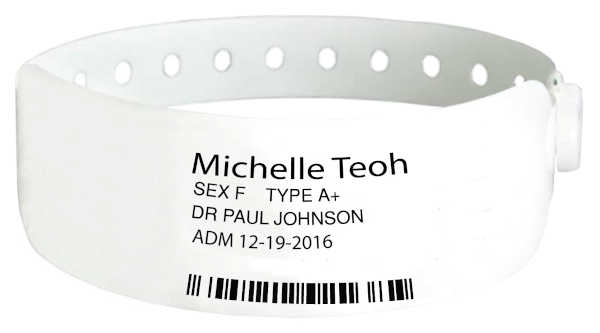
Admission date ADM is an abbreviation for "admission".Date of birth Date of death Date the patient started taking medication
$50 $25 $0 $75 3 visits × $25/visit = $75.
Ready for all 300 questions?
Unlock the full practice testPREFER PAPER?
Get the printed book
The practice questions and answers are also available as a physical book from Amazon.com.

About the CACMA exam
What is the CACMA exam?
The California Certified Medical Assistant (CACMA) examination assesses the skills and knowledge required of entry-level medical assistants. The exam is set by the California Certifying Board for Medical Assistants (CCBMA).
Passing the CACMA exam earns you a certificate and allows you to use the CACMA credential after your name.
Exam eligibility
Before applying for the CACMA exam, ensure you meet the eligibility criteria.
The exam has six eligibility routes:
- Currently employed as a medical assistant in the U.S.
- Graduated from a medical assisting program in the U.S. within the last five years
- Worked full-time as a medical assistant in the U.S. for at least two years within the last five years
- Working as a medical assisting instructor in an accredited institution in the U.S.
- Served in the U.S. military as a medical assistant in the last year
- Served in the U.S. military as a medical assistant for at least two of the past five years
Additionally, you must have training in venipuncture and/or administering injections (documented by a signed Certificate of Competency) and hold current CPR certification.
Applying for the CACMA exam
You can apply for the CACMA exam online at ccbma.org by following these steps:
- Go to ccbma.org
- Click Get Certified
- Under Apply for the Exam, select Begin
- Fill in your personal details
- Create a CCBMA account using the link the CCBMA emails to you
- Upload the required documents and pay the $250 exam fee
The CCBMA will process your application within 15 business days. Once approved, you can schedule your exam at a Pearson VUE testing center.
Documents you'll need to apply
You'll need the following documents to apply for the CACMA exam:
- Photo ID (driver's license, state ID card, or passport)
- CPR card or Basic Life Support (BLS) card
- Statement of Proficiency form (if you're applying as an employee or graduate). The form must completed and signed by a doctor, nurse, or physician assistant
- Proof of employment (if you're applying as an employee)
- Certificate of Completion (if you're applying as a graduate)
- Discharge form DD214 (if you're applying as an ex-member of the US military)
Rescheduling the exam
Contact Pearson VUE if you need to reschedule your exam. Rescheduling is free if you do it more than 24 hours in advance. However, if you reschedule within 24 hours of the exam start time, you will be charged a same-day forfeit exam fee.
Cancelling the exam
If you need to cancel a scheduled exam, contact Pearson VUE and CCBMA at least 15 days before the exam. CCBMA will refund your testing fee minus a $75 processing charge.
If you haven't scheduled your exam yet, you can cancel directly with CCBMA. They will cancel your application and refund your testing fee minus a $75 processing charge.
What to bring to the exam
You must bring a government ID with your photo and signature, such as a driver’s license, a state identity card, a passport, or a military ID.
You are not allowed to bring into the exam room:
- calculators (the test center will provide a calculator on request)
- phones
- books, notes, or paper
- food or drinks
You'll be given a locker to store these items.
Exam day
On the exam day, arrive at the testing center at least 30 minutes before the exam starts to allow time to check in and show your ID.
You'll be given a locker to store your belongings. You’ll then be taken to a computer where you’ll do the exam. The exam is 3 hours and 30 minutes long, with no breaks. You can change and review your answers before final submission.
How do I get my results?
After you finish the exam, the computer will tell you if you passed or failed.
If you pass, the CCBMA will mail your certificate, wallet card, and pin to you within 4 weeks.
What if I fail the exam?
If you fail the CACMA exam, don't worry! There is no limit to the number of times you can take the exam, which means you can keep retaking it until you pass. However, you will need to pay the exam fee of $250 for each retake.
Recertification
The CACMA credential expires after five years. To recertify, you must:
- pay a recertification fee of $200
- accumulate 60 continuing education units (CEUs)
The CEUs must be relevant to medical assisting and include training in CPR, HIPAA, and Cultural Competency. Visit the CCBMA website (ccbma.org) for more information on earning and counting CEUs.
Exam structure
The CACMA exam consists of 160 multiple-choice questions across nine content areas:
| Content area | % of exam |
|---|---|
| A. Scrubbing patient charts | 3% |
| B. Checking-in patients | 5% |
| C. Rooming patients | 12% |
| D. Collecting patient vitals | 16% |
| E. Performing point of care orders | 25% |
| F. Administering medications/vaccines | 16% |
| G. Discharging patients | 5% |
| H. Responding to codes/emergencies | 13% |
| I. Managing communication | 5% |
Content Area A. Scrubbing patient charts
The first content area of the CACMA exam, Scrubbing patient charts, is the least important as it is only worth 3% of the exam. This content area includes questions about:
- Determining the reason for the patient's visit
- Locating the patient's medical records
- Reviewing the doctor's assessment and plan from the patient's previous visit
- Determining if any health maintenance items are due
- Confirming the patient's insurance and/or payment method
- Confirming the appointment
Content Area B. Checking-in patients
The second content area of the CACMA exam, Checking-in patients, is worth 5% of the exam and includes questions about:
- Registering new patients
- Verifying patient demographics (name, date of birth, address, etc.)
- Making a copy of the patient's ID
- Obtaining the patient's insurance details
- Determining if the patient's insurance is valid
- Obtaining the patient's copay
Content Area C. Rooming patients
The third content area of the CACMA exam, Rooming patients, is worth 12% of the exam and includes questions about:
- Preparing the room for procedures
- Preparing the patient for procedures
- Verifying the patient's identity
- Asking the patient for their chief complaint
- Asking screening questions
- Obtaining the patient's medical history
- Reconciling medications
- Verifying pharmacy information
Content Area D. Collecting patient vitals
The fourth content area of the CACMA exam, Collecting patient vitals, is worth 16% of the exam and includes questions about:
- Weight and height
- Temperature
- Blood pressure
- Respiration
- Heart rate
- Oxygen level
Content Area E. Performing point of care orders
The fifth content area of the CACMA exam, Performing point of care orders, is the most important because it is worth 25% of the exam. It will include questions about:
- A1C test
- Blood draws
- Ear lavage
- Electrocardiograms
- Flu test
- Glucose test
- Hearing test
- Hemoglobin test
- Peak flow test
- Pregnancy test
- Purified protein derivative (PPD) test
- Strep test
- Urinalysis
- Vision test
Content Area F. Administering medications/vaccines
The sixth content area of the CACMA exam, Administering medications/vaccines, is worth 15% of the exam. It includes questions about:
- Verifying medication/vaccine orders
- Administering vaccines
- Administering injectables
Content Area G. Discharging patients
The seventh content area of the CACMA exam, Discharging patients, is worth 5% of the exam. It includes questions about:
- Giving after-visit summaries
- Giving discharge instructions
- Scheduling follow-up appointments
- Transcribing physician orders
Content Area H. Responding to codes/emergencies
The eighth content area of the CACMA exam, Responding to codes/emergencies, is worth 13% of the exam. It includes questions about:
- Assessing emergency situations
- Reporting emergency situations
- Controlling bleeding
- CPR
- Rapid Response Protocols (RRPs)
Content Area I. Managing communication
The final content area of the CACMA exam, Managing communication, is worth 5% of the exam and includes questions about:
- Managing correspondence
- Processing orders
- Processing referrals
- Processing requests for prescriptions
- Obtaining authorizations
- Obtaining physician signatures